

How to Start Exercising Again After 60
- May 9
- 5 min read
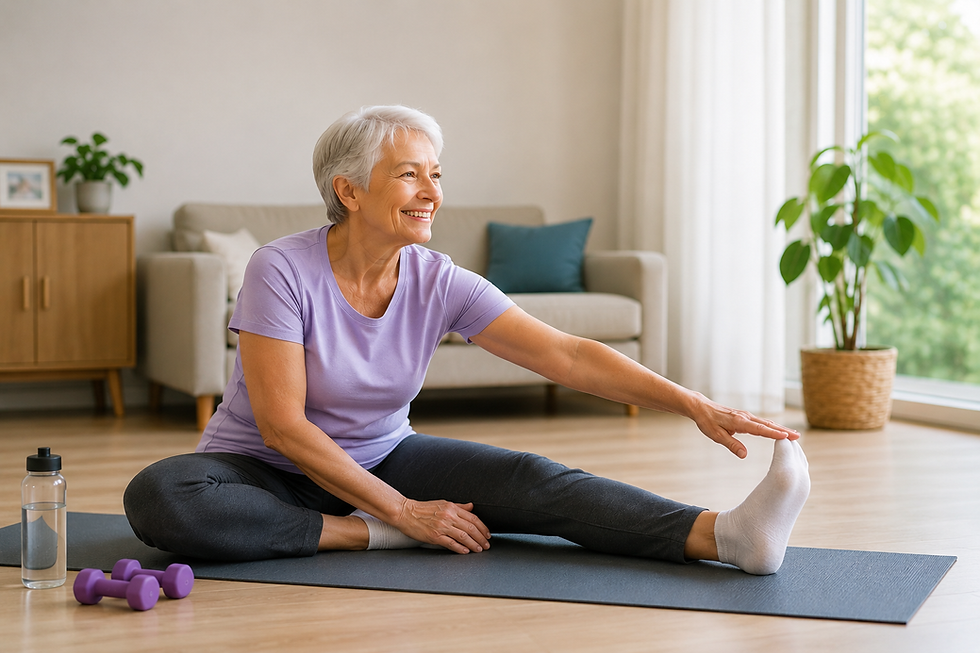
Starting to exercise again after 60 can feel intimidating. Maybe it has been years since you followed a routine. Perhaps life became busy, your energy changed, or your body simply does not move the way it used to. You may even feel nervous about getting injured or worry that you are “too old” to begin again.
The good news is this: it is never too late to start moving again.
You do not need to run marathons, lift heavy weights, or spend hours in a gym to improve your health. Small, gentle movements done consistently can make a remarkable difference in how you feel each day. Many adults over 60 notice improvements in balance, energy, confidence, flexibility, and even sleep after adding simple movement into their routine.
The most important thing is not how fast you start. It is simply that you begin.
Why Exercise Matters More Than Ever After 60
As we get older, our bodies naturally change. Muscles may become weaker, joints may feel stiffer, and balance can become less steady. Everyday activities such as climbing stairs, carrying shopping bags, or standing up from a chair may begin to feel harder than they once did.
Regular movement can help slow many of these changes.
Exercise can help:
Improve balance and stability
Reduce stiffness
Strengthen muscles
Increase energy levels
Support independence
Improve mood and confidence
Help with better sleep
Even gentle exercise has benefits. You do not need intense workouts to see progress.
In fact, starting slowly is often the best approach.

Start Small and Keep It Simple
One of the biggest mistakes people make when returning to exercise is trying to do too much too soon. After a few difficult workouts, they feel sore, discouraged, or overwhelmed and stop altogether.
Instead of thinking about dramatic changes, focus on small, manageable steps.
A five-minute routine is better than doing nothing.
A short walk around your home or garden still counts as movement.
Simple chair exercises still strengthen the body.
You are not trying to become an athlete overnight. You are simply helping your body move a little more comfortably each day.
Consistency matters much more than intensity.
Listen to Your Body
Your body will guide you if you pay attention to it.
Some mild muscle soreness can be normal when restarting exercise, but sharp pain or dizziness should never be ignored. Move slowly and give yourself permission to rest when needed.
There is no competition here.
One of the best things about exercising at this stage of life is learning to move with kindness and patience rather than pressure.
Take breaks when needed. Drink water. Breathe steadily. If one exercise feels uncomfortable, modify it or try something gentler.
Progress does not need to be perfect to be meaningful.
Begin With Gentle Exercises
The best exercises for beginners over 60 are usually simple, low-impact movements that improve mobility, strength, and balance without putting too much stress on the joints.
Here are a few excellent places to begin.

Chair Exercises
Chair exercises are a wonderful starting point because they provide support and stability while helping you rebuild strength and confidence.
Some simple chair exercises include:
Seated marching
Seated leg extensions
Shoulder rolls
Heel raises
Gentle seated twists
These movements can improve circulation, mobility, and coordination while helping you feel safer and more stable.
You can do them in your living room with nothing more than a sturdy chair.

Walking
Walking is one of the simplest and most effective forms of exercise for older adults.
It helps:
Improve heart health
Build stamina
Support balance
Boost mood
Strengthen the legs
You do not need long walks to benefit. Even 5 to 10 minutes a day is a great start.
If outdoor walking feels difficult, simply walking around your home can still help you stay active.
Gentle Stretching
Stretching can help reduce stiffness and improve flexibility.
Focus on slow, comfortable stretches for areas that often become tight, such as:
Neck
Shoulders
Hips
Calves
Lower back
Never force a stretch. Gentle movement is enough.

Balance Exercises
Balance naturally changes with age, which is why balance exercises are so important.
Simple balance movements may include:
Standing heel raises
Side leg raises
Marching in place
Standing while holding onto a chair
These exercises can help you feel steadier and more confident during daily activities.
Create a Routine You Can Actually Follow
The best exercise plan is the one you can stick with consistently.
You do not need an hour-long workout every day. In fact, shorter routines are often easier to maintain.
Try creating a simple weekly routine like this:
Monday: Gentle chair workout
Tuesday: Short walk
Wednesday: Stretching routine
Thursday: Rest or light movement
Friday: Balance exercises
Saturday: Walk or mobility session
Sunday: Gentle stretching
Keep your routine flexible and realistic.
Some days you may have more energy than others, and that is perfectly normal.
Focus on Progress, Not Perfection
Many people avoid exercise because they feel discouraged by where they are starting.
You may think:
“I am too stiff.”
“I am too out of shape.”
“I should have started years ago.”
But exercise is not about being perfect.
It is about improving little by little.
Maybe today you can only move for five minutes. A few weeks from now, you may notice it becoming easier to stand, walk, or climb stairs. Small improvements add up over time.
Celebrate every bit of progress, no matter how small it seems.
Make Exercise Feel Enjoyable
Exercise should not feel like punishment.
Choose movements that feel pleasant and manageable. Put on calming music. Exercise near a window with natural light. Invite a friend or partner to join you.
When movement feels enjoyable, it becomes much easier to stay consistent.
Remember:You are not trying to punish your body.
You are trying to support it.
Do Not Compare Yourself to Others
Everyone’s journey is different.
Some people may move more easily than others. Some may progress faster. But your only goal is to become a little stronger and more confident than you were yesterday.
Your body has carried you through many years of life. Treat it with patience and respect.
Starting again after 60 is not something to feel embarrassed about. It is something to feel proud of.
A Few Simple Tips for Success
Here are a few final tips to help you stay motivated:
Start slowly
Even a few minutes is enough.
Wear comfortable clothes
You do not need expensive equipment.
Keep a chair nearby
It can help with balance and confidence.
Stay hydrated
Drink water before and after movement.
Be consistent
Gentle daily movement is powerful.
Give yourself grace
Some days will feel easier than others.
It Is Never Too Late to Begin
One of the most encouraging things about movement is that the body can respond positively at almost any age.
You do not need to become the fittest person in the room. You simply need to begin where you are.
Every stretch, every step, and every gentle movement is an investment in your future strength, confidence, and independence.
The journey does not have to be fast.
It only has to begin.
Ready to Take the First Step?
If you are looking for a simple place to begin, download our free 5-Minute Daily Mobility Routine designed specifically for adults over 60.
It is gentle, beginner-friendly, and easy to follow right from your favorite chair.
Small steps can lead to big changes — and today is a wonderful day to start.
Comments